
Inflate a set of lungs without the smell! In this free virtual lung dissection, students feel the rings of cartilage in the trachea, pump air into the lungs and watch them inflate, then cut open the airways. They float-test a piece of lung tissue and zoom in to the alveoli, where gas exchange happens.
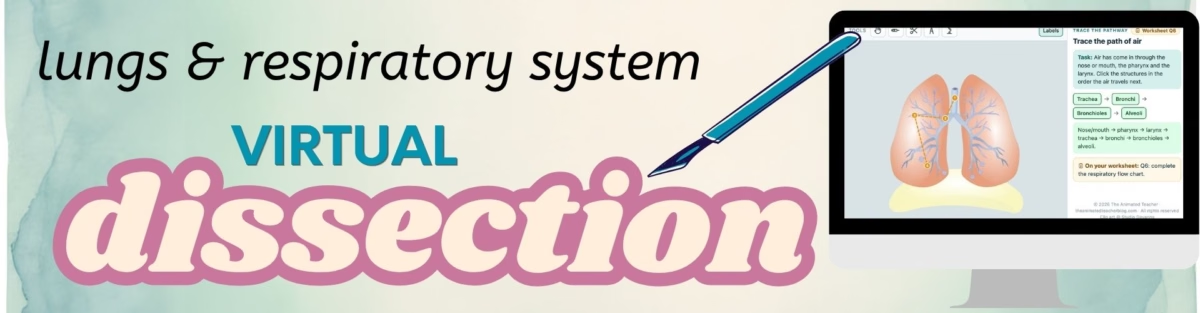
What students do in this virtual lung dissection lab
- identify the parts of the respiratory system, from the nasal cavity to the diaphragm
- feel the cartilage rings, then pump air into the lungs and watch them inflate
- cut open the airways with scissors and trace the path of air to the alveoli
- do the float test on a piece of lung tissue and explain the result
- examine alveoli and gas exchange, and the cilia and goblet cells that keep the airways clean
- find the lungs and heart in a photo of a real dissection
Syllabus links
This virtual lung dissection supports the NSW Science Stage 4 outcomes on the respiratory system and on how the structure of organs relates to their function. It also suits middle school units on breathing, the lungs and the respiratory system.
Get the printable worksheet to accompany the virtual lung dissection
The matching worksheet takes students through the lab question by question, with large label boxes for the diagrams and a full answer key, in colour and black and white. Get the Lung Dissection Virtual Lab Worksheet on TpT: [TpT link – Lab 3]
Frequently asked questions
Why does lung tissue float? Lungs are full of millions of tiny air sacs called alveoli. The trapped air makes lung tissue less dense than water, so it floats.
Is this a good alternative to a sheep pluck dissection? Yes. Students see the same structures and use the same steps, and it is also a great way to prepare for a real pluck dissection.
More free virtual dissections
Try the digestive system dissection, heart dissection, lung dissection, kidney dissection, sheep brain dissection or frog dissection, or see all the virtual dissections here.